New Mexico Groundwater Alliance Members
The New Mexico Groundwater Alliance is made up of community leaders and policy experts from New Mexico's water community and advised by representatives from the state's water agencies.

Aron Balok
Superintendent, Pecos Valley Artesian Conservancy District
Aron Balok is the Superintendent for the Pecos Valley Artesian Conservancy District and a Commissioner on the New Mexico Interstate Stream Commission. He is currently the secretary/treasurer for the New Mexico Water Resources Association. Aron has a passion for New Mexico's agricultural heritage and a deep appreciation for the complexity of the water issues that face the state and the nation. He has been professionally involved in water-related issues for the past seventeen years.
Aron was raised on a small cattle ranch in Northwestern New Mexico. He attended New Mexico State University, and in 1997 graduated with a Bachelor of Science degree, in Agriculture Extension Education. He and his Wife Hayly live in Roswell New Mexico raising their three daughters.

Dr. Ladona Clayton
Executive Director, Ogallala Land & Water Conservancy
Dr. Ladona K. Clayton is the founding Executive Director of the Ogallala Land & Water Conservancy (OLWC) in Clovis, New Mexico. Under her leadership, OLWC has built one of the nation’s first groundwater conservation programs focused on the paleochannels of the Ogallala Aquifer—protecting vital water resources for Cannon Air Force Base, Clovis, and surrounding agricultural communities.
Drawing on more than three decades in education, public service, and water policy, Dr. Clayton leads collaborative, science-informed efforts to retire irrigation wells, secure conservation easements, and advance regenerative agriculture across eastern New Mexico. Her work unites landowners, federal agencies, local governments, and conservation partners to safeguard groundwater for both community survival and national security.
Appointed by the Governor of New Mexico in 2024, Dr. Clayton serves as a public member of the Natural Lands Protection Committee, representing the ranching and farming industry and recognized for her expertise in water rights and conservation. In this role, she collaborates with the Energy, Minerals and Natural Resources Department (EMNRD) to recommend acquisitions and stewardship of ecologically significant lands and water resources. These projects are supported through the Land of Enchantment Legacy Fund, which provides consistent funding for the Natural Heritage Conservation Act (NHCA)—enabling annual grants for conservation easements and restoration projects that protect natural areas, wildlife habitats, agricultural lands, and watersheds.
Before leading the OLWC, Dr. Clayton served as a Clovis City Commissioner, chairing the city’s first Eastern New Mexico Water Conservation Summit in 2016 and leading the City of Clovis’s Master Water Assurance Plan adopted in 2017. Through OLWC, she manages partnerships with the Department of Defense’s Readiness and Environmental Protection Integration (REPI) Program, the Natural Resources Conservation Service (NRCS), the Office of the State Engineer, the Thornburg Foundation, and the Texas Agricultural Land Trust, resulting in long-term conservation easements and Water Right Lease Agreements that save billions of gallons of groundwater annually.
Dr. Clayton also serves on the Executive Committee of the New Mexico Water Ambassadors and on the boards of the New Mexico Water Dialogue and the Groundwater Alliance, as well as the state’s Water Security Planning Committee. She holds a B.A. in Education, an M.Ed. in Education Administration, and an Ed.D. in Educational Leadership, and lives with her husband, Mark, in Clovis and Angel Fire, New Mexico.

Dr. Gretel Follingstad
Senior Manager, Climate Resilient Water Systems, Environmental Defense Fund
Dr. Follingstad is a Senior Manager, for the Climate Resilient Water Systems Team at the Environmental Defense Fund. Gretel brings over 17 years of experience in water, land use, and community resilience planning. As a versatile thought leader and early adopter of resilience thinking, Gretel’s professional praxis, scholarly research, and publications focus on the necessity and urgency of an equitable approach to climate resilience planning.
She has broad experience advancing collaborative water resource management and policy; risk assessment-based drought planning for mitigation and response; applications of environmental and social science research for hazards and disaster mitigation; modeling water, landcover/land use and remotely sensed data to inform strategic decision making under uncertainty; and land-use solutions for growth management.
Gretel holds a PhD in Geography, Planning, and Design from the University of Colorado, Denver, where her doctoral research focused on building water resilience for drought prone, rapidly growing communities under the pressures of increasing water scarcity due to rising temperatures and aridification. In addition to her PhD, Gretel holds a Master’s in Community and Regional Planning, a Bachelor of Business Administration in International Management and Latin American Studies, and a Certificate in Science and Technology Policy. Gretel is a native New Mexican, fluent in Spanish and loves spending time outdoors with her family in Northern New Mexico, camping, back country skiing, mountain biking, kayaking and practicing yoga.

Maurice Hall
Senior Advisor, Climate Resilient Water Systems, Environmental Defense Fund
As senior advisor of climate resilient water systems, Maurice Hall oversees Environmental Defense Fund’s work to manage groundwater more sustainably and revitalize working rivers and their ability to provide a resilient water supply. He focuses on developing collaborative water management approaches to meet ecosystem needs alongside the needs of farms and cities. Approaches central to this work include shaping water transaction programs that achieve resilient water supplies while protecting the environment and vulnerable communities, improving information systems to inform smart management of water resources, and shaping water governance that proactively considers multiple objectives and responds to climate change.

Dr. Phil King
Principal Engineer, King Engineering & Associates Inc.; Special Technical Advisor to OSE/ISC
J. Phillip King is a Professor and Associate Department Head in the Civil Engineering Department at New Mexico State University. His research includes river and groundwater system modeling and management, optimization and decision theory, basin-scale management and policy, and hydrologic forecasting. His activities also include projects to enhance the diversity of the country’s STEM workforce. Phil is also Principal Engineer for King Engineering & Associates, a small New Mexico–based consulting firm. Phil has worked with government agencies, irrigators, municipalities, Native American tribes, and environmental groups to develop new and innovative approaches to water management and education. He served as a Peace Corps volunteer in Malawi, Africa, and as a Fellow of the American Association for the Advancement of Science at the National Science Foundation. Phil has a PhD from Colorado State University, a BS from Berkeley, and an MBA. from NMSU. He is a registered Professional Engineer in New Mexico.

Ramón Lucero
Regional Field Manager, Rural Community Assistance Corporation (RCAC)
Ramon Lucero joined RCAC in 2020. He supervises, supports, and coordinates field staff and their activities in Arizona and New Mexico; manages relationships with funders; and conducts outreach to philanthropic partners and state and federal agencies to maintain positive working relationships. His responsibilities include working with the Grants and Contracts Administration (GCA) Departments and other Regional Managers to optimize service delivery and program growth and provide quality control and oversight of activities. Ramón has more than 25 years of experience managing the funding, planning, design, implementation, and operation and management of water and wastewater system infrastructure improvement projects for municipalities and rural communities in the state of New Mexico.
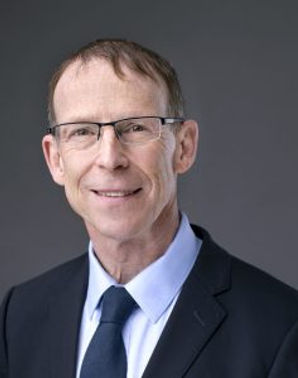
Patrick McCarthy
Senior Water Policy Officer, Thornburg Foundation
Patrick McCarthy is the Senior Water Policy Officer at the Thornburg Foundation. Trained as a scientist, he has worked for the last twenty years at the intersection of ecological science, water governance, and community capacity-building. Before joining the Thornburg Foundation, Patrick worked with water managers and community leaders across the U.S. Southwest and in southern Africa on evidence-based solutions for water resources policy, planning, and management. In his work with grantees and partners, Patrick aspires to help create a New Mexico in which healthy watersheds provide clean, abundant, and equitable water to communities and ecosystems. Patrick holds a master’s degree in ecology and a bachelor’s degree in anthropology/zoology and has been awarded fellowships by the Switzer Foundation and the American Association for the Advancement of Science. He lives in Santa Fe with his wife and two children.

Adrian Oglesby, J.D.
Director, Utton Transboundary Resources Center (UNM)
Adrian Oglesby is the Director of Utton Transboundary Resources Center at the University of New Mexico. He received a B.A. in Natural History from the Evergreen State College and is a graduate of the UNM School of Law. Adrian's legal career has been focused on river and riparian restoration, agricultural preservation, governmental accountability, and efficient water management. He has advised irrigation districts, acequias, ranchers and farmers, environmental organizations, local water providers, the ISC, and Pueblo and tribal governments. He is proud to be on the board of Rio Grande Return and a Commissioner on the Acequia del Llano.
Advisory Members
Lisa Henne
General Counsel, Interstate Stream Commission / Office of the State Engineer
Lisa Henne is a New Mexico attorney with ten years of experience in water law and policy, environmental law, and administrative law. Ph.D. in regional planning with specialization in watershed management and freshwater ecology. She has over twenty-five years of education and professional experience in water law, policy, and science.
Michelle Hunter
Deputy Director, NM Interstate Stream Commission / Office of the State Engineer
Michelle is the former Ground Water Quality Bureau chief at the New Mexico Environment Department and has more than 25 years in environmental consulting, brownfield redevelopment, regulatory services, and western water policy experience, with expertise in groundwater quality and environmental due diligence.
Phoebe Suina
Owner, Project Manager, and Hydrologist, High Water Mark, LLC
With a background in environmental engineering and management, Ms. Suina has managed multi-million-dollar emergency and disaster assistance projects for the Federal Emergency Management Agency (FEMA), in addition to her previous career at the US Department of Energy (DOE) and Los Alamos National Laboratory (LANL) for post-Cerro Grande fire erosion, sediment control, debris flow and flood hazard mitigation. She also has led environmental compliance and environmental remediation efforts for over 10 years on DOE and LANL projects. Ms. Suina has also worked for the U.S. Bureau of Reclamation, where she completed water resources engineering project design, operation and maintenance on the nation’s rivers and waterways.
Ms. Suina currently manages emergency and disaster assistance projects for High Water Mark’s clients. This involves meetings with client and funding agency staff, documentation of all project activities, expenditures and records management, and project closeout. She is meticulous in her record keeping and takes pride in her attention to detail.
Ms. Suina earned bachelor degrees in environmental engineering and engineering sciences and a graduate degree in engineering management, all from the Thayer School of Engineering at Dartmouth College. Phoebe is from the Pueblos of San Felipe and Cochiti. She is very active in the traditional culture of her respective Pueblos. She continues to assist and share her knowledge and skills with the Pueblo communities.
Stacy Timmons
Associate Director, Hydrogeology Programs, New Mexico Bureau of Geology & Mineral Resources
Working on the hydrogeology of New Mexico since 2004, Stacy has enjoyed working in various roles, from field data collection to project management, all around the southwest and New Mexico at the Bureau of Geology. Developing regional-scale hydrogeology projects to address critical societal questions or issues has been the emphasis of Stacy's work at the Bureau. A key aspect she enjoys is helping people understand their water resources, especially groundwater. Stacy began serving as an Associate Director for Hydrogeology Programs at the Bureau in 2019, which includes coordinating efforts of the Aquifer Mapping Program, the NM Water Data Initiative, and the Water Leaders Education Program.
Hannah Riseley‑White
Director, NM Interstate Stream Commission / Office of the State Engineer
Hannah Riseley-White was appointed by Gov. Michelle Lujan Grisham to lead the New Mexico Interstate Stream Commission (ISC) on July 5, 2023. She started at the ISC in 2014 in the Pecos Bureau and was later selected to lead that bureau from 2017 to 2020. She served as the Deputy Director of the ISC since 2020. She holds a bachelor’s degree in politics from New York University and a master’s degree in water resources management from the Bren School of Environmental Science & Management at University of California at Santa Barbara.
Katie Zemlick
Chief, Hydrology Bureau, Office of the State Engineer
Katie Zemlick is the Hydrology Bureau Chief for the New Mexico Office of the State Engineer. Bureau hydrologists develop and utilize groundwater models and other technical analyses in support of water rights administration, settlements and adjudications. Hydrology Bureau staff employ their expertise and the best available science and technology to better understand New Mexico’s water resources, now and into the future. Katie holds a B.A. degree in Environmental Studies from Prescott College, a Master’s degree in Water Resources and a Ph.D. in Civil Engineering, both from the University of New Mexico. Her research used computational modeling, spatial analysis, and big data to understand interdependencies between water and a variety of energy sources and applications – including oil and gas development, uranium mining, and electricity transmission planning. Prior to joining the Hydrology Bureau, Katie worked as an Environmental Scientist at Sandia National Laboratory, a research assistant in Civil Engineering and Economics at the University of New Mexico, and a postdoctoral scholar with the National Science Foundation.